

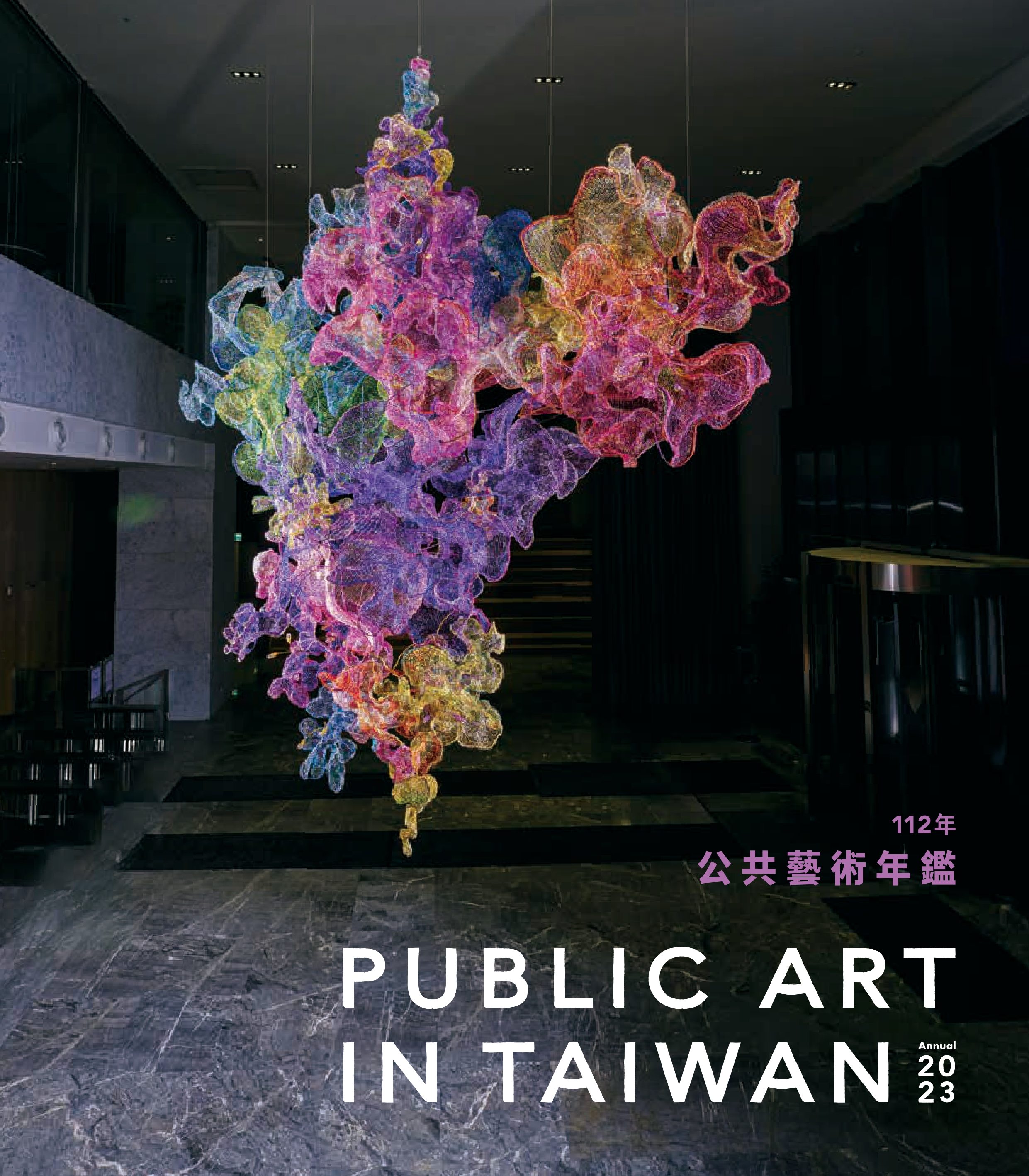
The development of public art in Taiwan traces back to the enactment of the Culture and the Arts Reward Act in 1992 (renamed the Culture and Arts Reward and Promotion Act in 2021). Since the establishment of this legal foundation, public art has become a visible presence in every corner of Taiwan.
Over the past 3 decades, public art in Taiwan has continually transformed and evolved. In its early years, the focus was on the straightforward “installation of artworks.” As related legislation gradually adapted, practices expanded to include the use of new media, integration with architectural environments, cross-disciplinary collaboration, and projects encompassing art programs, public participation, educational outreach, and cultural performances. Today, public art embraces a multitude of forms and possibilities. At the same time, changes in the scale of public buildings and major infrastructure projects have brought enormous variation to public art budgets. Certain special projects now cost billions or tens of billion dollars, resulting in wide disparities in the funding allocated for public art. Under such circumstances, it is no longer feasible to apply a single standard to all public art planning.
The most recent legislative amendments addressed the range of practical challenges that public art projects face today, acknowledging changes in temporal and spatial conditions, funding requirements, and differing concepts and expectations regarding public art. Significant adjustments were introduced, including clearer provisions for projects with total public art budgets under NT$500,000: “Plans ought mainly to be directed at public art promotion, public participation, cultivation of aesthetics, art/culture experiences, art projects, environmental aesthetics, curation, and related efforts.” This allows implementing agencies greater flexibility in execution. Additionally, new rules were introduced for projects with budgets between NT$500,000 and NT$2 million, offering multiple options and greater operational space.
Article 10 of the Regulations on the Installation of Public Art, amended and promulgated on August 1, 2024, stipulates:
“Where the total public art budget is between NT$500,000 and NT$2 million, the implementing agency (organization) should engage in one of the following:
a. public art promotion, public participation, cultivation of aesthetics, art/culture experiences, art projects, environmental aesthetics, curation, and related efforts, which the implementing agency (organization) may implement itself after submitting a table detailing basic related information to the review committee for approval. The implementing agency (organization) shall also prepare and submit a final report to the reviewing agency for its reference.
b. where the public art is permanent in nature, the stipulations of Article 11, Article 12, and Article 17 as well as related regulations shall apply.
Where the review committee denies approval for the above, the public art budget shall be remitted to the fund or dedicated account established by the relevant supervisory agency.”
Statistics over the years show that projects with budgets between NT$500,000 and NT$2 million are relatively common. At current price levels, such a budget is modest for permanent installations, often sufficient for only one or two works. However, when allocated toward educational promotion or software-based programming, the same funds can achieve far more. To maximize the effectiveness of these budgets and reduce administrative overhead, the Ministry of Culture encourages implementing agencies to handle such projects internally, while ensuring the process does not become burdensome. This flexibility enables agencies to choose between installing permanent works or implementing programs such as public art education promotion, and other related activities.
When it comes to budgets under NT$2 million, there is no single correct way to utilize the funds if permanent works are not pursued. In the past, many “public participation” or “educational promotion” components in public art projects were secondary or symbolic. With limited budgets, artists often weren’t particularly skilled at activities beyond their creative practice. As a result, they would deliver limited formats such as “opening ceremonies”, “guided tours”, “lectures”, or, with greater effort, “DIY workshops” related to the works. Some projects produce “brochures” or “commemorative cultural products” in respond to the agency’s needs. In recent years, however, the concepts of public participation and educational promotion have broadened significantly, with increasingly diverse methods of execution. By granting legal flexibility, the aim is to empower implementing agencies to consider their unique institutional identity, audience perspectives, geographic context, target objectives, available manpower, and resources to exercise their own creativity and plan projects most suitable for themselves.
First and foremost, implementing agencies must clearly define their needs and objectives, and think long term.
For example, for a school, the priority lies in strengthening students’ aesthetic education—whether by enriching art curricula, enhancing aesthetic literacy, broadening awareness of public art, or extending into the aesthetics of everyday environments. The participants are not limited to students alone: teachers are equally key stakeholders, and parents and nearby residents can also be included in the circle of engagement. With the support of public art funding and resources, possibilities extend far beyond lectures or art-and-craft activities. Schools can invite artists-in-residence to engage in deep exchanges with students and faculty, co-create artworks, and present the results through curated exhibitions that extend their influence into the community. Expert consultants and educational experts can be brought in to help teachers refine lesson plans and develop teaching materials. Even a systematic approach can be constructed through publications or video documentation to extend benefits, allowing future teachers and students to follow and operate accordingly.
Secondly, understanding an agency’s own strengths and available resources can create a multiplying effect.
For instance, libraries or community activity centers, which already in close contact with local residents. Their mission is to provide a range of cultural and everyday services. For promotion purposes, they might already have lectures, often including lectures, exhibitions, and public programs. Staff members are therefore generally familiar with implementing educational promotion or public participation programs. By leveraging existing manpower and space, and integrating the additional resources of public art funding, these agencies can align with relevant themes to broaden their budget and enrich their programming. As a result, their services become more diverse and dynamic, producing an amplified impact.
Furthermore, creativity can unlock new possibilities by responding to an agency’s unique character, local culture, and contextual conditions.
Every agency has its own function, mission, and historical context. It's difficult to apply single standardized model across all agencies. Yet creativity is boundless: public art should be seen not as a burden but as an additional resource. Art can be a bridge to connect the community, a medium for storytelling, and a powerful tool for image-building.
Below are several case studies shared for reference.
“Encountering with Egret” in Neihu—Public Art Festival
(Winner of the 6th Public Art Award – Best Education Promotion Award)
Using the egret, a symbol with strong local significance, as its central motif, the project invited nearly 30 schools in the Neihu district to collaborate in creating 200 painted egrets. These artworks were installed across various public spaces, including parks, traffic roundabouts, and MRT stations, so that both residents and visiting tourists could experience the delightful surprise of “encountering an egret.”
The wooden egret cutouts were not merely decorative objects. The true meaning lay in the collaboration with teachers to incorporate different project themes into school curricula, such as “Cherishing What We Have” (2nd edition) and “The Gentle Power” (3rd edition). Students engaged broadly in the creative process and expressed their interpretations and environmental concerns through painting.
This initiative thus extended far beyond art education, touching on life education, environmental awareness, and achieving the goal of broad public participation.
Sanzhi Elementary School Aesthetic Education Program
With over a century of history, Sanzhi Elementary School approached public art funding not as a means to install artworks, but as a way to utilize limited funding resources to invest in aesthetic education.
Given its large student body and existing art faculty, the program introduced a series of lectures and workshops, fostering interaction between artists and teachers. Together, they designed grade-specific courses, with artists leading initial classes while teachers observed and co-facilitated. Afterwards, both sides engaged in discussion and reflection, using the experience as a reference for teaching the subsequent classes.
For teachers, working directly with artists provided a fresh source of stimulation—broadening their perspectives while also inspiring new and creative lesson plans.
An Unexpected Encounter with Art at Songshan Cultural and Creative Park
During the “Encountering with Egrets” Public Art Festival, several artists were invited to create new works. Once the festival ended, many remarkable pieces faced the prospect of being discarded. To extend their visibility, the organizing team collaborated with the Songshan Cultural and Creative Park to curate the outdoor exhibition “An Unexpected Encounter with Art at Songshan Cultural and Creative Park”.
In addition to works from the art festival, through borrowing exhibitions, works suitable for outdoor display were collected from artists. In the end, the festival brought together 16 artists, 29 large-scale works, and a selection of 30 sets of painted egrets, organized into 4 thematic zones based on environmental characteristics and artwork type features: “The Garden of Water”, “The Garden of Light”, “The Garden of Sculpture”, and “The Avenue of Art”. Furthermore, to complement the exhibition, the "3Q Garden" creative participation project was planned, inviting public participation to jointly complete another installation. A very spectacular exhibition was held in the park, which was also the first large-scale outdoor art exhibition in Songshan Cultural and Creative Park.
This project serves as a distinctive case, embodying the concept of resource reuse. With only minimal expenses for transportation, insurance, and loans, the scale and impact of the exhibition far exceeded expectations yet delivered significant public impact. In recent years, many cities and counties have hosted art festivals that generate large numbers of temporary installations; such resource-sharing models offer a highly effective approach for public art promotion.
There are too many cases and limited space, but as mentioned earlier, there is no standard answer for how budgets under NT$2 million can be utilized. The key point is that since the law provides both opportunity and flexibility, and simplifies the implementation process, resources should not be wasted. Each institution should make full use of its creativity to apply them wisely.